Pharmaceutical Packaging Market Analysis (2025–2032):The Strategic Role of Plastic Packaging
Global Pharmaceutical Packaging Market Overview
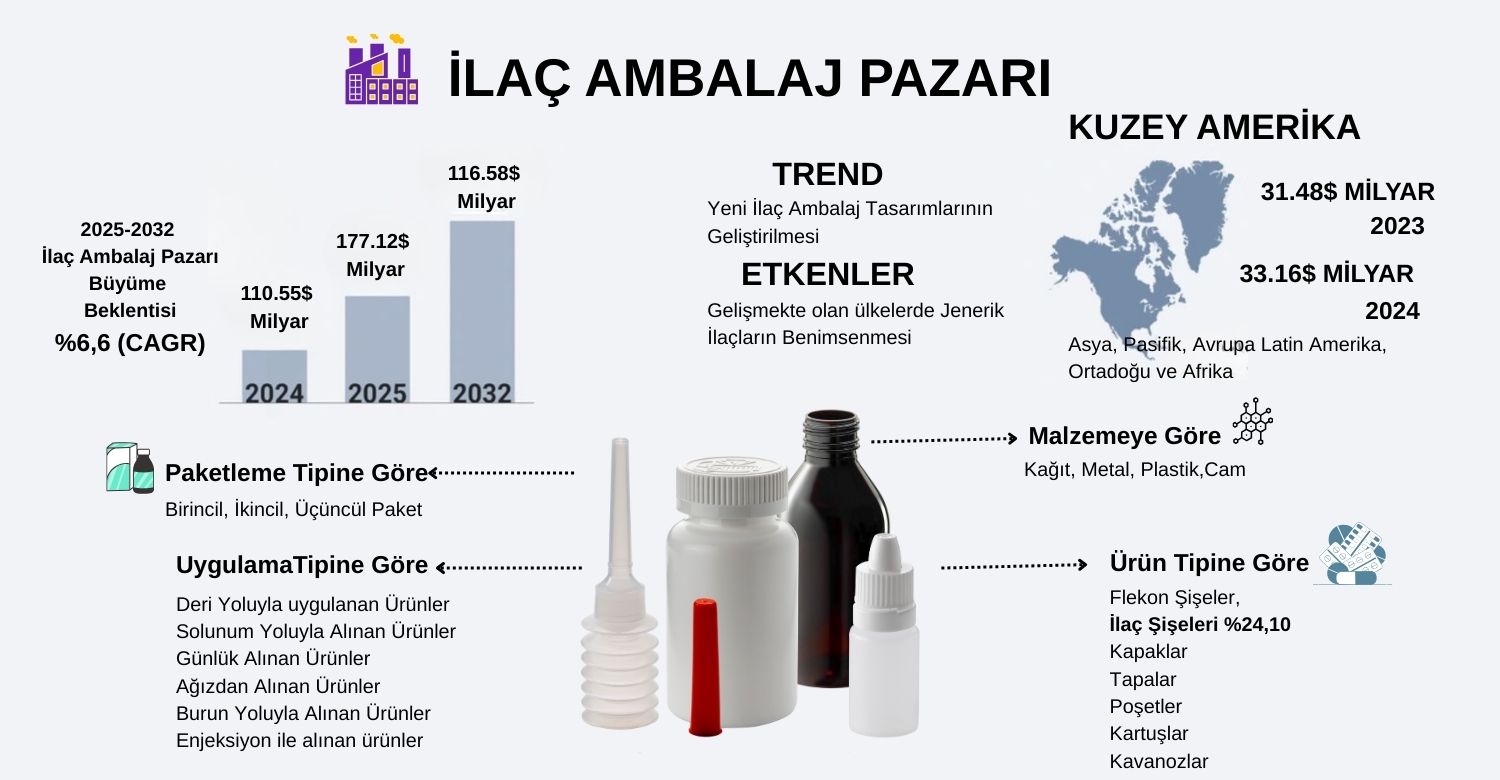
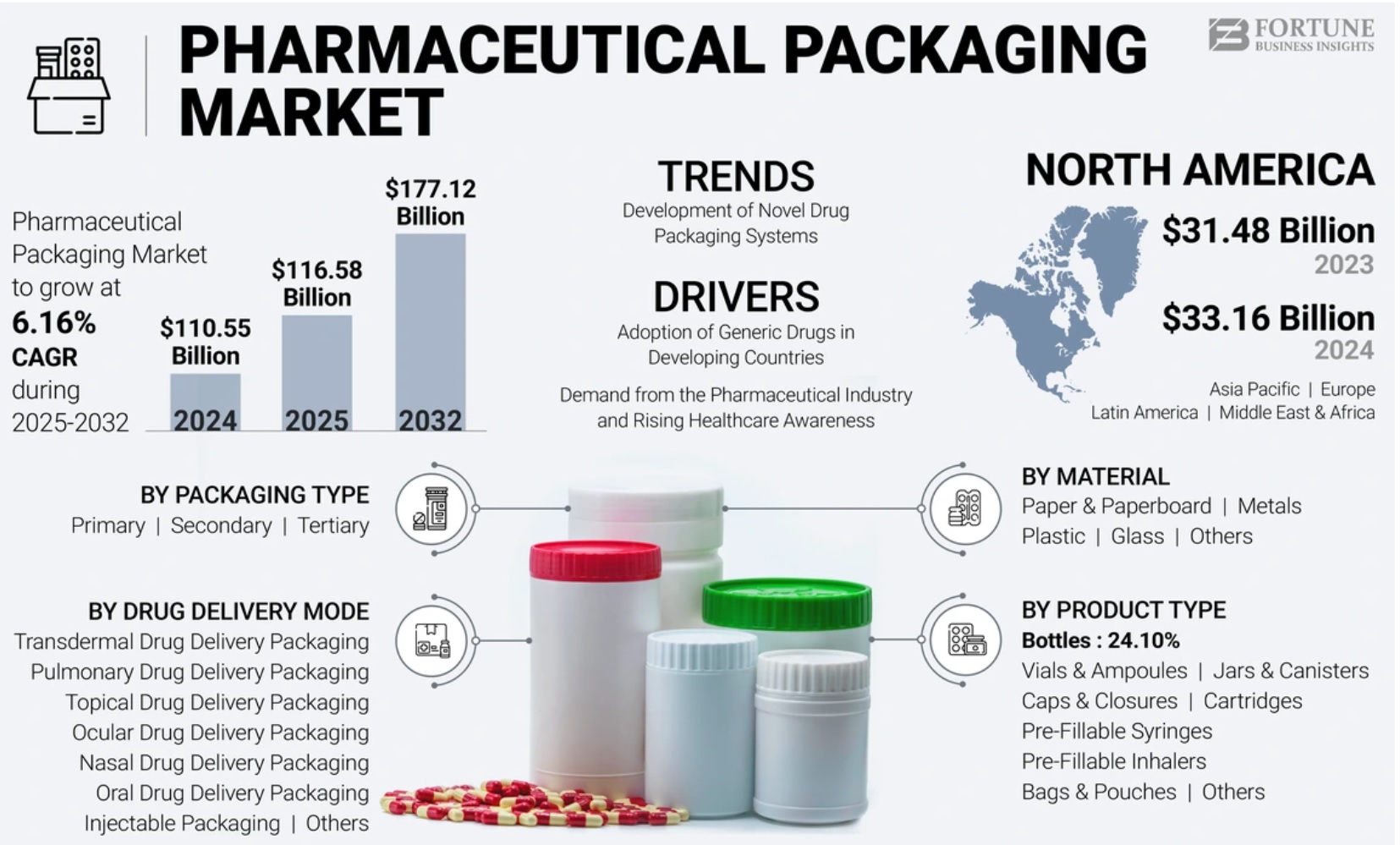
The pharmaceutical packaging market continues to expand steadily in line with growth in the healthcare sector, increasing drug consumption, and tightening regulatory requirements. The global pharmaceutical packaging market was valued at USD 110.55 billion in 2024 and is expected to reach USD 116.58 billion in 2025, growing further to USD 177.12 billion by 2032. During this period, the market is projected to grow at a compound annual growth rate (CAGR) of 6.16%.
From a regional perspective, North America holds a leading position with approximately 30% market share, while Europe and Asia-Pacific regions also demonstrate strong growth potential.
What Is Pharmaceutical Packaging and Why Is It Critical?
Pharmaceutical packaging encompasses all materials and processes used to protect, store, and safely deliver pharmaceutical products to patients. In addition to protecting drugs from environmental factors such as moisture, light, oxygen, and temperature, pharmaceutical packaging fulfills several critical functions:
Expiration date management and traceability
In this context, pharmaceutical packaging is not merely a protective layer but an integral component of patient safety and drug efficacy.
Market Dynamics
How Does Growth in the Pharmaceutical Industry Affect the Market?
Rising global population, increased health awareness, and growing demand for biotechnological and specialty drugs are driving expansion in the pharmaceutical industry worldwide. Pharmaceutical production has accelerated not only in emerging economies such as China, India, and Brazil, but also in developed markets including the United States, Germany, and the United Kingdom.
This growth directly increases demand for pharmaceutical packaging, particularly for high-volume, standardized, and regulation-compliant packaging solutions.
The Rise of Generic Drugs and Packaging Demand
In developing countries, the lower cost of generic drugs has significantly accelerated their adoption. Since generic drugs contain the same active ingredients, dosage, and therapeutic effects as originator products, they must comply with the same quality and safety standards in packaging.
This trend has notably increased demand for plastic packaging solutions, expanding the market share of products such as bottles, blister packs, and closure systems. For instance, India supplies approximately 20% of the global generic drug market, highlighting the scale of packaging demand driven by generics.
Market Constraints: The Risk of Counterfeit Drugs
Counterfeit drugs represent one of the most serious threats to the global pharmaceutical and packaging industries. These products, which may contain incorrect or insufficient active ingredients, are often introduced to the market through illegal third-party packaging operations.
This risk increases the importance of traceability, serialization, and secure packaging technologies, while simultaneously placing additional pressure on manufacturers in terms of cost and compliance.
Sustainable and Smart Packaging: A Key Opportunity Area
Environmental sustainability is one of the fastest-growing focus areas in the pharmaceutical packaging sector. Recyclable and eco-friendly plastics, bio-based polymers, and PVC-free solutions are becoming increasingly widespread.
Innovations such as:
Smart packaging (RFID, sensors)
Active packaging solutions (moisture and oxygen absorbers)
add significant value to the sector by improving drug safety and enhancing patient adherence.
Stringent Regulations and Compliance Requirements
The pharmaceutical packaging industry is subject to strict regulations defined by authorities such as the FDA, EMA, and WHO. Requirements related to labeling, child-resistant closures, tamper-evidence, and serialization create substantial operational challenges for manufacturers.
However, packaging producers that achieve full regulatory compliance gain a strong competitive advantage in terms of market trust, long-term partnerships, and sustainable growth.
The Strength of Plastic Packaging in the Pharmaceutical Industry
Plastic remains the most widely used material in pharmaceutical packaging. Plastics such as PET and PP offer:
Lightweight structure
High design flexibility
Chemical resistance
Cost efficiency
making them ideal solutions for pharmaceutical applications. Bottles, closures, blister packs, jars, and outer packaging components are safely produced using these materials.
Paper and paperboard, on the other hand, are primarily used in secondary and tertiary packaging, supporting logistics efficiency and product information requirements.
Conclusion: A Strategic Period for Plastic Packaging Manufacturers
The 2025–2032 period represents a phase of strong growth and transformation for the pharmaceutical packaging industry. Companies with capabilities in sustainable plastic solutions, smart packaging technologies, and regulation-compliant manufacturing infrastructures are expected to capture the greatest share of this growth.
For plastic packaging manufacturers, this period makes investments not only in production capacity, but also in R&D, quality systems, and sustainability initiatives a strategic priority.
Source: Fortune Business Insights – Pharmaceutical Packaging Market