loader

Etiket: Serialization

  • Home
  • Etiket: Serialization
15Haziran 2026

Serialization, Track and Trace, and Evolving Packaging Compliance in the Pharmaceutical Industry

As counterfeit medicines become increasingly widespread and pose a growing threat to public health, track-and-trace systems have become indispensable. Regulatory authorities in Türkiye and around the world are now implementing stronger measures to improve pharmaceutical safety.
The issue of counterfeit—or “substandard and falsified”—medicines is not limited to a single country. It has become a major global public health crisis. Until the beginning of 2026, counterfeiting was particularly prevalent in the vitamins and performance-enhancing supplements market. However, as of 2026, counterfeit activity has increasingly shifted towards medicines used in potentially life-saving treatments, including antibiotics, insulin, and the rapidly growing category of GLP-1 weight-loss medications.
The following statistics illustrate the scale and seriousness of the problem:
• Market value: The annual value of the global counterfeit pharmaceutical market is estimated to be as high as USD 432 billion.
• Prevalence: The World Health Organization estimates that one in every ten medical products in low- and middle-income countries is either substandard or falsified.
• Regional burden: Africa carries the heaviest burden, with an estimated prevalence rate of approximately 18.7%. This is almost twice the global average reported for developing countries.
• “East-to-West” flow: Approximately 79% of dangerous counterfeit products seized at international borders originate from China and Hong Kong, with the United States and European Union countries being among their main destinations.
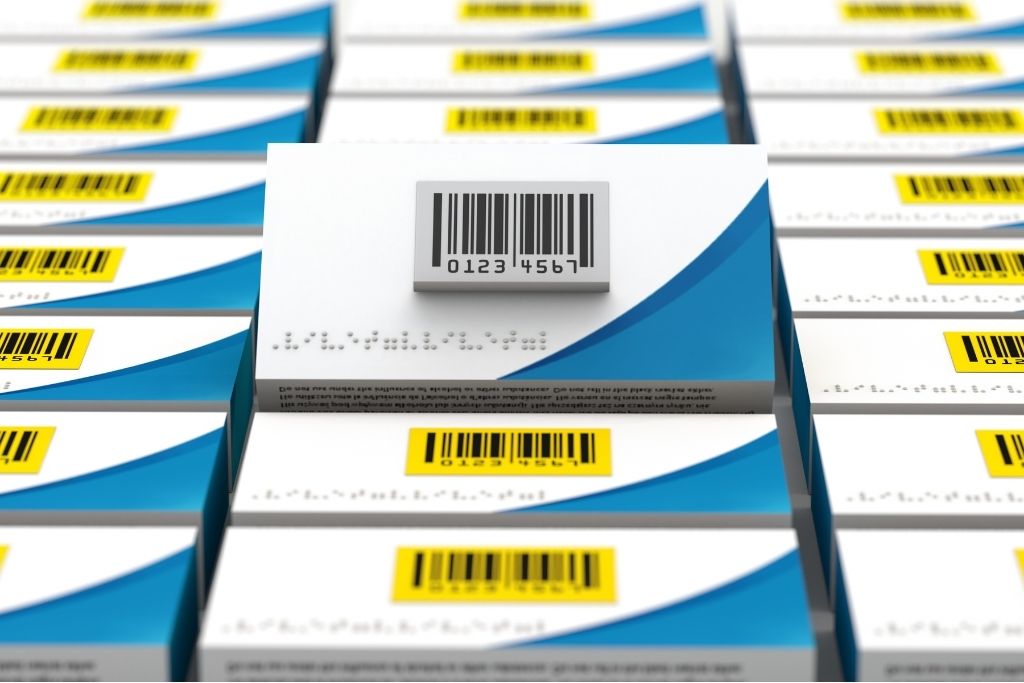
These developments demonstrate that serialization has evolved far beyond simply printing a unique barcode on each secondary package. They once again highlight the importance of creating a clear, complete, and verifiable data trail for every pharmaceutical product, from production to the end user.
The Evolution of Global Pharmaceutical Packaging Compliance Requirements
Serialization has transformed packaging compliance in the pharmaceutical industry. In the past, compliance primarily focused on accurate labelling and the use of tamper-evident seals. Today, compliance requires each individual product unit to be tracked from the manufacturing facility to the pharmacy shelf, creating a dynamic and continuous monitoring process.
This has created a complex global regulatory environment for pharmaceutical packaging. Different countries and regions have introduced their own serialization and traceability standards.
For example, the European Union’s Falsified Medicines Directive requires the use of two-dimensional barcodes and anti-tampering devices. In the United States, the Drug Supply Chain Security Act requires electronic, interoperable traceability at the package level.
In Türkiye, the Pharmaceutical Track and Trace System, known as İTS, is used as a central registration and monitoring platform. The system requires human medicinal products to be uniquely identified using Data Matrix codes. It tracks, in real time, all supply-chain movements and related cancellations reported at each stage through which a product passes. These activities include production, import, export, purchasing, sales, transfers, consumption, loss, and reimbursement. The system also enables essential operations such as product recalls and blocking.
When pharmaceutical products cross international borders, packaging systems must be capable of adapting, printing, and verifying different data sets according to the regulatory requirements of the country or region in which the medicine will be sold.
Track and Trace in Pharmaceutical Packaging: Turning Regulatory Compliance into a Competitive Advantage
Leading companies in the smart packaging industry view track-and-trace requirements not merely as a regulatory burden, but as an opportunity to create a competitive advantage.
With robust serialization technology, pharmaceutical companies can gain greater visibility and control over their supply chains. This makes it possible to identify bottlenecks more quickly, manage inventory more effectively, and carry out accurate and targeted product recalls when necessary.
Compliance with regulatory requirements also demonstrates a company’s commitment to safety and quality. As a result, it can strengthen trust among healthcare authorities, business partners, healthcare professionals, and patients.
Important Note
The online sale of prescription medicines is prohibited in Türkiye. Only certain product categories, including food supplements, vitamins, dermocosmetic products, and medical devices such as blood pressure monitors, may be purchased online through the websites of licensed pharmacies.
To minimise the risk of purchasing counterfeit products, consumers should use only official and reputable websites operated by licensed businesses with established physical pharmacies.


8Nisan 2026

What Awaits the Pharmaceutical Packaging Industry in 2026?

The pharmaceutical packaging industry is heading into 2026 with a focus not only on production capacity and cost optimization, but also on sustainability, regulatory compliance, digitalization, and the development of high value-added solutions. For plastic pharmaceutical packaging manufacturers in particular, this period represents a clear transition from traditional production approaches to a more strategic, agile, and regulation-driven structure.

Today, the key question facing the sector is no longer simply “how can we produce more?” but rather “how can we produce in a more sustainable, safer, and more compliant way?” As of 2026, this transformation is expected to become far more visible both in global markets and across the broader region that includes Europe, the Middle East, and North Africa.

Sustainability Is No Longer Optional

Sustainability has been on the pharmaceutical packaging agenda for years, but by 2026 it is becoming much more concrete and unavoidable. One of the most significant shifts will be the move away from traditional multilayer blister packs, which are difficult to recycle, toward mono-material solutions based on PET or PP. This transition is critical not only for reducing environmental impact, but also for simplifying recycling processes.

At the same time, biodegradable and plant-based polymers are expected to gain wider use, especially in secondary packaging. For manufacturers, this shift will require more than simply sourcing alternative materials; it will also demand a reassessment of design strategies, supply chains, and production capabilities.

EU Regulations Are Creating a New Threshold for Turkish Manufacturers

For companies operating in Türkiye and targeting the European market, one of the most important developments is the European Union’s Packaging and Packaging Waste Regulation. With the rules set to fully take effect on August 12, 2026, recyclability and the use of recycled content will become even more central to market access.

In other words, sustainability will no longer be a competitive advantage alone; it will become a basic condition for doing business. For Turkish pharmaceutical packaging manufacturers, 2026 will mark a period in which quality, certification, and environmental compliance will play a decisive role in export performance. Especially for companies serving EU markets, compliance will be essential not only from a legal standpoint, but also for long-term commercial sustainability.

The Era of Smart and Digital Packaging Is Gaining Momentum

Counterfeit prevention, patient safety, and product authentication are accelerating the digital transformation of pharmaceutical packaging. Serialization and track-and-trace systems are expected to become standard practice, enabling every individual pack to be monitored from production to the end user.

In addition, QR codes and NFC-enabled solutions are turning packaging into more than just a protective layer. Packaging is becoming a communication platform that connects directly with patients. Through their smartphones, users will be able to access digital leaflets, receive dosage reminders, and verify product authenticity instantly. This development is setting a new benchmark for both patient experience and product safety.

Automation and Artificial Intelligence Will Have a Greater Impact on Production

In 2026, manufacturing lines will be shaped not only by speed and capacity, but also by advanced error prevention and quality assurance systems. AI-powered visual inspection systems will enable much more precise control over critical points such as labeling, sealing, and product integrity. Many issues that may go unnoticed by the human eye will be identified more effectively by digital systems, raising overall quality standards.

At the same time, cloud-based digital workflows will reduce errors and improve operational efficiency in design approvals, regulatory updates, and documentation processes. This will further accelerate the sector’s transition from manual procedures to data-driven decision-making.

Biological Drugs Are Reshaping Packaging Needs

The rise of biological and injectable drugs is creating new demands for both materials and packaging formats. High-barrier COP/COC-based vials and prefillable syringes are expected to be among the strongest growth areas in the coming period. These solutions are particularly important for protecting sensitive formulations and meeting increasingly strict safety requirements.

In Türkiye as well, the growing importance of injectable plastic containers designed for biotechnological drugs highlights the sector’s shift from standard packaging products toward more technical and higher value-added solutions.

Türkiye’s Role in the Regional Market Is Strengthening

Across Europe, the Middle East, and North Africa, the pharmaceutical packaging market continues to expand. Rising healthcare expenditure, local pharmaceutical manufacturing investments, and the restructuring of regional supply chains are creating new opportunities for Turkish manufacturers. Türkiye’s quality standards, manufacturing capability, and delivery reliability position it as one of the region’s preferred suppliers.

Particularly in the Middle East and North Africa, policies encouraging local pharmaceutical production are increasing the demand for packaging solutions. This creates a strategic growth area for Türkiye-based manufacturers not only in the domestic market, but also on the export side.

The Shift from Cost to Compliance and Added Value

Purchasing criteria in pharmaceutical packaging are also evolving. In the past, solutions were often evaluated mainly on unit cost. Today, they are increasingly assessed through a broader lens that includes regulatory compliance, traceability, safety, and user experience. Child-resistant systems, easy-open designs, and anti-counterfeiting features are becoming more important than standard packaging formats alone.

This creates a strong advantage for companies that invest in high production quality, robust certification infrastructure, and advanced technology. In this sense, 2026 will stand out as a year in which the sector moves more decisively from a low-cost production mindset toward one centered on reliability, safety, and compliance.

Conclusion

The year 2026 will not simply be a period in which new trends are discussed in pharmaceutical packaging. It will be a defining threshold in which expectations, rules, and competitive conditions are fundamentally reshaped. Sustainability, digitalization, AI-supported manufacturing, high-performance packaging for biological drugs, and compliance with international regulations will stand out as the key forces shaping the future of the sector.

For manufacturers that prepare for this transformation today, 2026 will bring not only challenges but also important opportunities for growth, differentiation, and stronger positioning in global markets. For Turkish manufacturers in particular, this period can be seen as the most visible step in the transition from resilience to strategic transformation.

Source: www.plasfed.org.tr, www.grandviewresearch.com,www.plastik-ambalaj.com, www.futuremarketinsights.com